
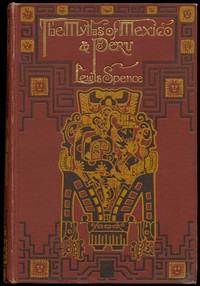
The Myths of Mexico & Peru by Lewis Spence
Lewis Spence's book isn't a straight history or a dry archaeological report. Instead, he gathers the foundational stories, gods, and creation myths of cultures like the Aztecs, Maya, and Incas. He presents them as the living belief systems they once were.
The Story
There isn't a single plot. The book is a guided tour through a cosmic landscape. It starts with how these civilizations believed the world began—often from chaos, or from gods sacrificing themselves. Then we meet the pantheon: Quetzalcoatl, the feathered serpent god of wisdom who promised to return; Viracocha, the bearded creator god of the Andes; and countless others governing rain, war, and maize. Spence shows how these myths weren't just bedtime stories. They dictated laws, inspired awe-inspiring architecture like the sun temple at Cuzco, and justified rituals that seem shocking to us. The "story" is how a people's imagination shaped their entire reality, from empire-building to their calendar, right up to the moment Spanish ships appeared on the horizon, which some tragically interpreted as the fulfillment of their own prophecies.
Why You Should Read It
I loved this because it makes the past feel immediate and human. Reading about the Aztec belief that the sun needed the "precious water" (human blood) to fight its nightly battle against the darkness isn't just a gruesome fact. It's a window into a universe where that logic made perfect, terrifying sense. You stop seeing "human sacrifice" as a barbaric headline and start to understand it as the ultimate, desperate act of keeping cosmic order. Spence, writing over a century ago, has his own biases, but his passion for collecting these fading stories is clear. The book feels like a rescue mission for imaginations that were nearly erased.
Final Verdict
This is perfect for anyone curious about mythology beyond the Greeks and Romans, or for travelers who want deeper context before visiting Mexico or Peru. It's also great for writers and world-builders looking for truly original inspiration. Be warned: it's an older book, so some archaeological details are outdated. Don't read it for cutting-edge history. Read it to hear the powerful, haunting, and often beautiful voices of these lost civilizations, telling their stories of how the world works. It’s a fascinating and humbling experience.
This text is dedicated to the public domain. It is available for public use and education.
James Davis
3 months agoThe analytical framework presented is both innovative and robust.
Paul Lopez
1 year agoMy first impression was quite positive because the inclusion of diverse viewpoints strengthens the overall narrative. A perfect balance of theory and practical advice.
David Miller
1 month agoFrom a researcher's perspective, the argument presented in the middle section is particularly compelling. It definitely lives up to the reputation of the publisher.
Joseph Davis
2 years agoThe clarity of the introduction set high expectations, and the way the author breaks down the core concepts is remarkably clear. Truly a masterpiece of digital educational material.








Robert Jones
1 year agoImpressive quality for a digital edition.