1

Brknk's Bounty — Reading Notes
10
1
Project Gutenberg
2010
Science fiction; Short stories; Human-alien encounters -- Fiction
Readers of public-domain and historical texts
Project Gutenberg digital edition
en
Edition facts
Words: 6,076
Reading time: 27 min
Text sections: 1
Source:
Project Gutenberg record #31964
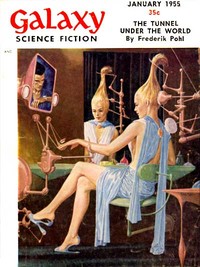
A newspaperman's typewriter is sabotaged by a tiny alien who forces him to compose alliterative poetry, leading to a bizarre encounter with the Sybillians and an unexpected physical transformation.
Editorial Edition Score
4.3/5
★★★★★
★★★★★
Calculated from edition completeness, EPUB availability, text structure and catalogue metadata. Not a user rating.
Edition quality
Jerry Sohl's "Brknk's Bounty" opens with a first-person narrator who has traded newspaper work for circus life, a shift he attributes to a tiny alien named Trlk. The story's voice is colloquial and self-deprecating, the narrator recalling his initial disbelief as his typewriter keys begin to malfunction, producing only alliterative phrases like "Dimly drouse the dreary droves." The humor emerges from the mundane setting—a city room during a summer vacation schedule—invaded by the absurd: a fuzzy, mouse-like creature with chipmunk teeth that dictates poetry. Sohl builds the narrative through the narrator's gradual acceptance of the impossible, from the mechanical sabotage to the revelation of the Sybillians and their gift. The tale balances a newspaperman's cynicism with wonder, culminating in a physical change that redefines his life.
Voice and the Unreliable Narrator
The narrator's voice is central to the story's effect. He speaks in a breezy, conversational tone, addressing the reader directly with asides like "Who knows?" and "I suppose." This creates intimacy but also uncertainty: his account of the typewriter's rebellion—keys that "wouldn't go all the way down"—is filtered through his own incredulity. He checks for hangovers, suspects a prank by city editor Oscar Phipps, and only reluctantly accepts the alien's presence. The voice shifts from baffled to amused to rueful, especially in the final lines where he contemplates vibrating his tail in Phipps's face. This unreliability is not a flaw but a tool: the reader is left to decide how much of the tale is truth, fantasy, or a reporter's embellishment.
Pacing and the Escalation of the Absurd
The story's pace accelerates from a slow, realistic setup to a rapid-fire series of bizarre events. The opening paragraphs dwell on the tedium of newspaper work—probate court notes, the vacation schedule—before the typewriter's malfunction introduces a low-level mystery. The pace quickens as the narrator discovers the creature, then Trlk, and finally the Sybillian Brknk. The middle section compresses negotiations, a trip to the Sybillian world, and the return, all in a few paragraphs. The final twist—the growing tail—is delivered with deadpan brevity: "I was growing a tail—a long, hairy tail." This abrupt shift from the fantastic to the physical grounds the story in a concrete, absurd consequence, leaving the reader to catch up with the narrator's new reality.
Recurring Details and Thematic Threads
Several details recur to anchor the narrative. The typewriter itself is a persistent object: its keys, cover plate, and levers are described with mechanical precision. The alliterative poetry—"Primly prides the privy prose"—becomes a signature of the alien's interference. The narrator's relationship with Phipps frames the story: Phipps's skepticism ("I'd never amount to anything") is echoed in the narrator's final defiant fantasy. The Sybillians' gift, a tail, is both a burden and a boon, transforming the narrator from a failed journalist into a circus attraction. These threads—mechanical failure, poetic compulsion, professional rivalry, and physical mutation—weave together to create a coherent, if surreal, world.
Readers should pay attention to the story's tonal shifts: the narrator's voice moves from sardonic to sincere, especially in his farewell to Trlk. The brevity of the tale—just over 6,000 words—means every detail counts. Notice how Sohl uses the typewriter as a character in itself, and how the alliterative poems serve as a kind of alien language. The ending, with its casual acceptance of the tail, invites rereading to catch the clues that foreshadow the transformation.
Reader reflection
What was your reading experience?
Capture what you thought, learned, and would like to remember.
Your progress
0
/
10
2
Was reading this book enjoyable?
3
Is this a title you would suggest to others?
4
Did the language feel accessible?
5
Which element worked best for you?
6
Did the book offer a fresh perspective?
7
Would this book work well in a reading group?
8
How strongly did the book affect you emotionally?
9
What changed or sharpened your thinking?
10