L
Lisa Mays
Guest
- Thread Author
- #1
Choose a tropical or subtropical bonsai, place it at a bright south-facing window when possible, and water when the soil begins to dry, not by a fixed schedule. Keep the tree warm, give it strong light, and make sure excess water drains freely.
You've brought home a small tree, found a place for it indoors, and now the soil looks damp but the leaves are dropping. The natural impulse is often to water again. In practice, the bigger question may be whether the species belongs inside at all, and whether the light reaching its leaves is strong enough to support growth.
Indoor bonsai care works best as a process of matching the tree to its environment, then responding to what the tree and soil show you. A reliable routine isn't complicated, but it does depend on observation: look at the species, check the canopy's light, feel the substrate, and diagnose symptoms before reaching for water or fertilizer.
A juniper on a table away from the window may start dropping foliage, even if its owner waters whenever the soil surface looks pale. The problem may be the tree's location and species, not a missed watering. Junipers are temperate outdoor trees; keeping one indoors year-round does not turn it into a houseplant.
Indoor bonsai became more common as growers explored species that could cope with homes and apartments. The Brooklyn Botanic Garden describes the shift from traditional outdoor bonsai to indoor cultivation. In the 1950s, horticulturists including Yuji Yoshimura and his teacher Toshio Okamura worked with nontraditional species suited to indoor conditions and taught the subject widely. Their work points to the practical starting point: indoor bonsai is a species-selection problem first. The Brooklyn Botanic Garden's account of bonsai moving indoors traces the move toward tropical and subtropical trees.
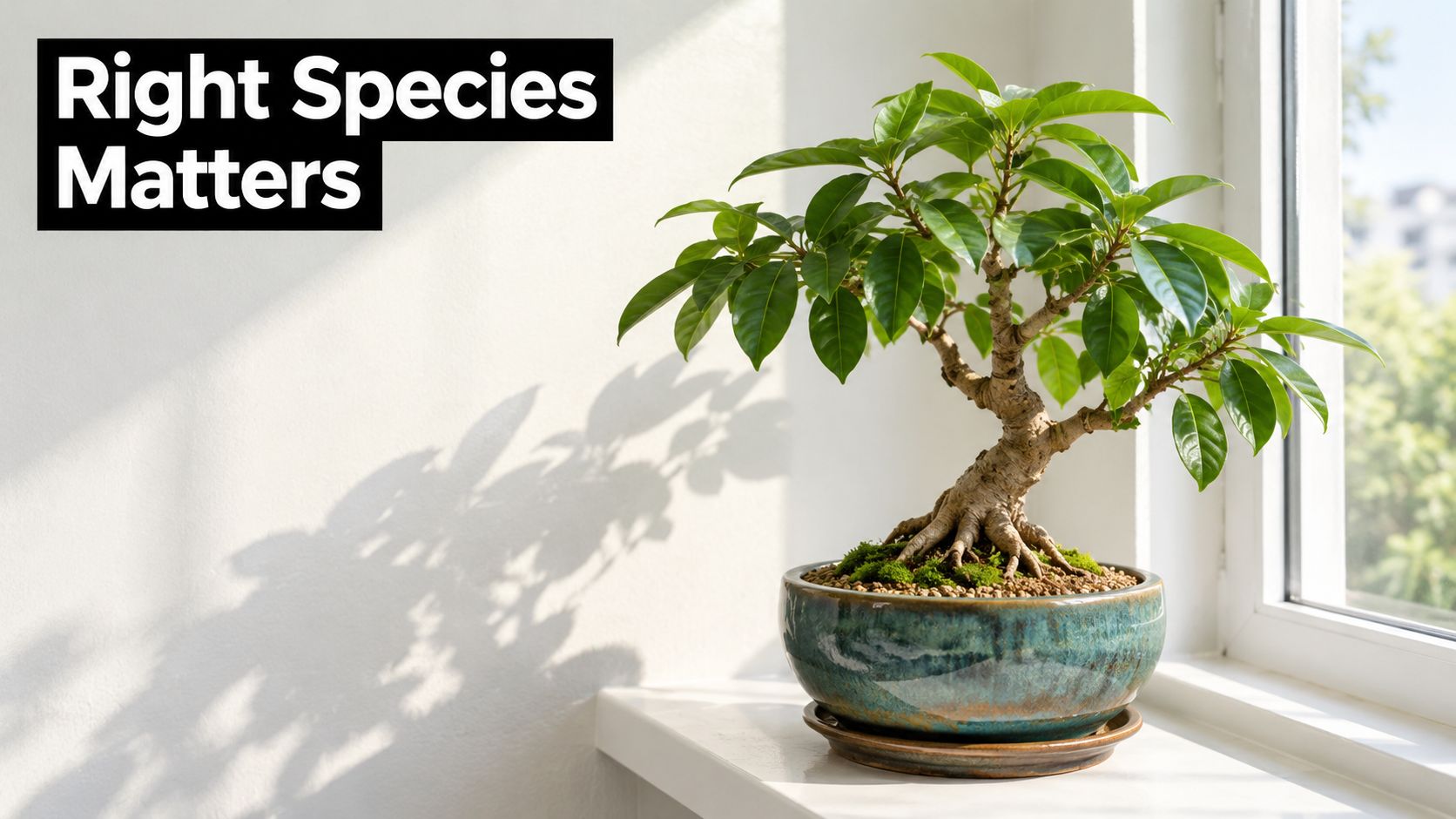
Ficus can suit a warm, bright room, provided it gets enough light and warmth, grows in free-draining soil, and is watered with care. A juniper needs outdoor seasonal conditions. Many pines, maples, and larches also need winter dormancy, making them poor choices for year-round indoor culture. Species needs determine whether a tree can live indoors; placement and care cannot make every bonsai suitable.
Before buying, identify the species and check whether it can remain indoors throughout the year. A small size, decorative pot, or shop label reading “bonsai” tells you little about its growing requirements. Leaves and growth habit can offer clues, but confirm the species where possible. This guide to indoor bonsai trees for beginners offers a shortlist of candidates.
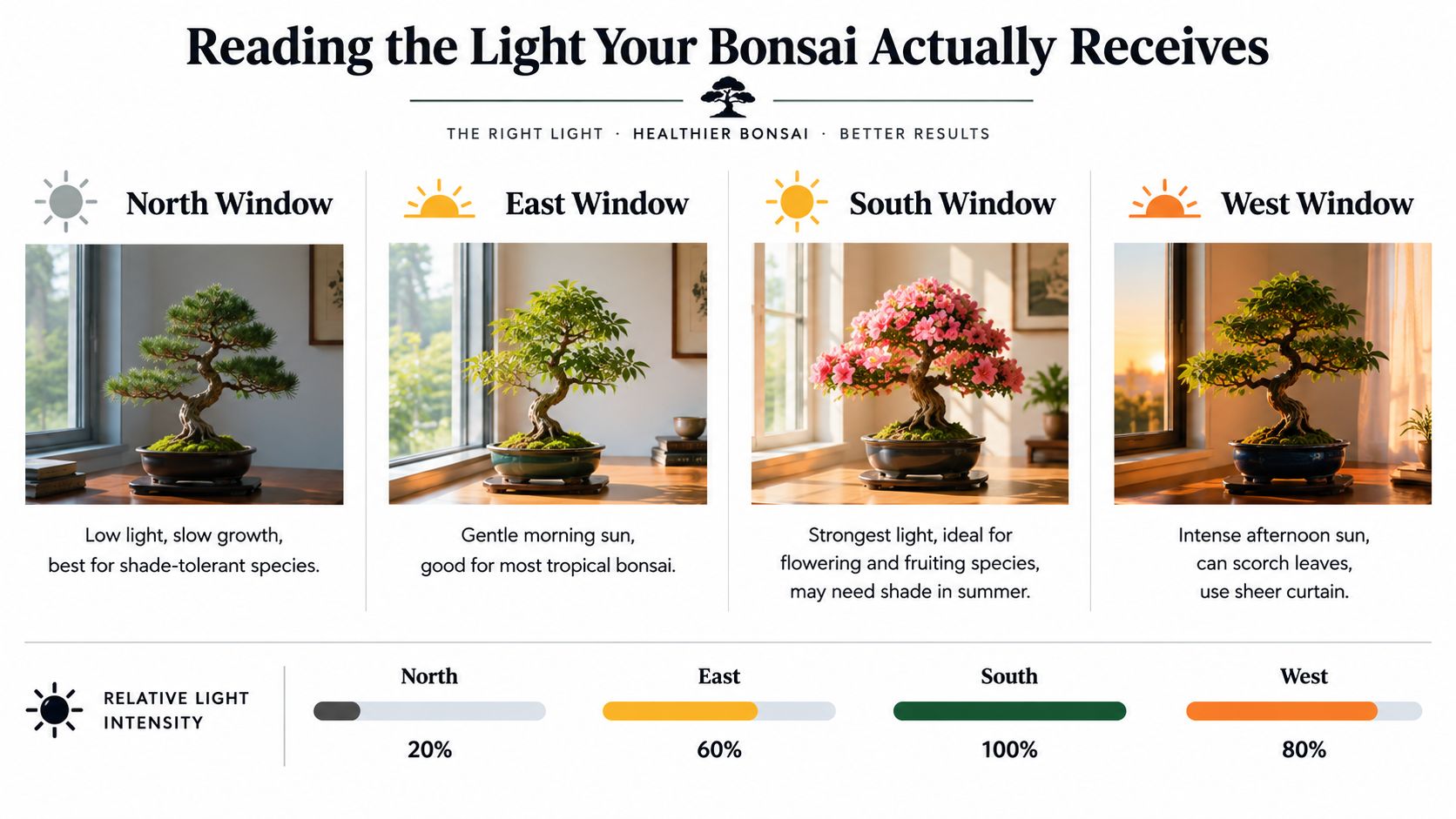
A window's direction helps you choose a starting position, but it can't tell you exactly how much light reaches the leaves. Nearby buildings, curtains, glazing, season, and the tree's distance from the glass all change the light at the canopy. That's why “bright window” is useful shorthand, not a complete diagnosis.
For many homes, a south-facing window is the strongest ordinary indoor location. East- and west-facing windows are secondary options, while a position deep in a room can receive much less useful light than the window itself. The right placement also depends on the species. A tree showing weak growth in an east-facing spot may need a brighter location, while a plant close to hot glass may need protection from harsh conditions.
Watch new shoots and leaves over time. Long spaces between leaves, weak or stretched shoots, pale new growth, and leaf drop can point to inadequate light. These signs aren't a diagnosis on their own, so check for other stressors before acting. But if the tree sits far from the glass and keeps producing weak growth, adding fertilizer or water isn't the first fix. Move it nearer a bright window, or consider supplemental lighting.
Light has two aspects: intensity and duration. A dim room lit for a long period isn't necessarily equivalent to a shorter period of strong light. When daylight doesn't provide enough, an artificial light can help; guidance for indoor bonsai recommends approximately 14–16 hours per day of artificial light when natural light is inadequate. Virginia Cooperative Extension's bonsai guidance also cautions that indoor holding periods are normally brief for many bonsai and emphasizes ventilation.
Use a full-spectrum LED positioned to illuminate the canopy, and assess new growth rather than assuming a longer timer setting has solved the problem. There isn't one universal light threshold for every species and home. Window direction is only a proxy, so the tree's response is part of the test.
A bonsai near a warm window can dry quickly; one in dim conditions may stay wet much longer. Species matters, too: some tolerate a brief dry-down better than others, while others show stress quickly. Set your routine around the tree's needs and the actual moisture in its substrate, not a fixed weekday.
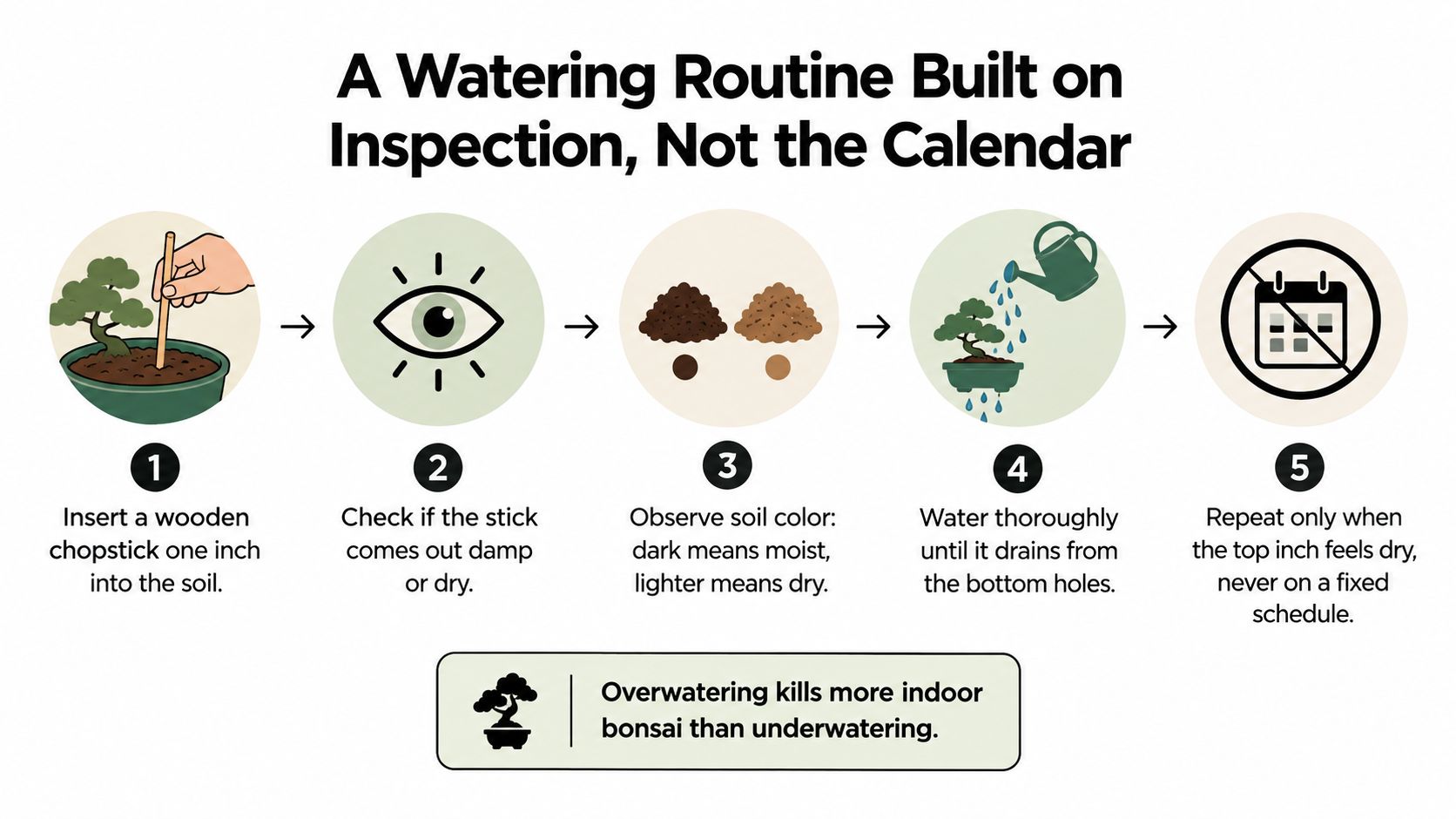
Check below the surface rather than judging by the top layer alone. Gently insert a wooden chopstick into the soil. If it comes out damp, wait and check again; if the mix is starting to dry, water thoroughly. Avoid disturbing the roots, and don't treat a moisture-meter reading as universal. Different substrates retain water differently.
Pour slowly over the soil until water flows freely from the drainage holes. Check that the holes are open, then empty the saucer so the pot does not stand in collected water. If a dry mix repels water or has dry pockets, immerse the pot for approximately 5–10 minutes, lift it out, and let it drain fully. Penn State's bonsai care guidance describes this method and advises watering according to need.
Frequent light sprinkling can leave the root ball unevenly watered. The surface may look damp while deeper areas remain dry. Give the soil a thorough soak, then allow excess water to drain.
Water demand shifts with the season and the tree's surroundings. Warm, dry conditions can require much more frequent watering, while low light and slower winter growth often mean the mix takes longer to dry. During hot, dry periods, some bonsai may need watering as often as twice daily. As noted earlier, species and growing conditions determine the routine, so use the soil's drying pattern to guide each check.
A pot can look tidy and still hold a damaging amount of water. For indoor bonsai, soil structure matters because roots need both moisture and air. Dense, compacted mix dries slowly; an overly coarse mix may dry so quickly that the tree can't keep up. Aim for a stable, free-draining substrate suited to the species and the conditions in your home.
These materials can be blended to suit the tree and watering conditions; no single recipe fits every bonsai. Whatever mix you use, check that the pot has open drainage holes and never leave the base standing in collected water. For more help choosing a mix, consult this guide to soil for indoor bonsai.
Repotting needs vary with the species, its growth, and how quickly the substrate breaks down. Instead of following a rigid interval, check whether water still passes through well and whether roots have crowded the pot. When you do repot, work gently: lift the tree, loosen circling roots, and remove dead or damaged sections without stripping away every fine root. Preserve healthy feeder roots, which absorb water and nutrients, and keep the tree stable as you settle fresh mix around them.
A decorative pot is a poor trade if it hides drainage problems. Choose a container with working drainage, and check that water exits freely after repotting. If the tree is weakened, avoid combining major root work with aggressive pruning. The aim is to restore a healthy root environment, not to force a dramatic redesign in one sitting.
Indoor trees often lean toward their strongest light. If the canopy keeps reaching for a window, rotate the pot periodically so growth doesn't concentrate on one side, and observe which shoots remain vigorous. A weak branch may not recover after a hard cut if it already receives little light.
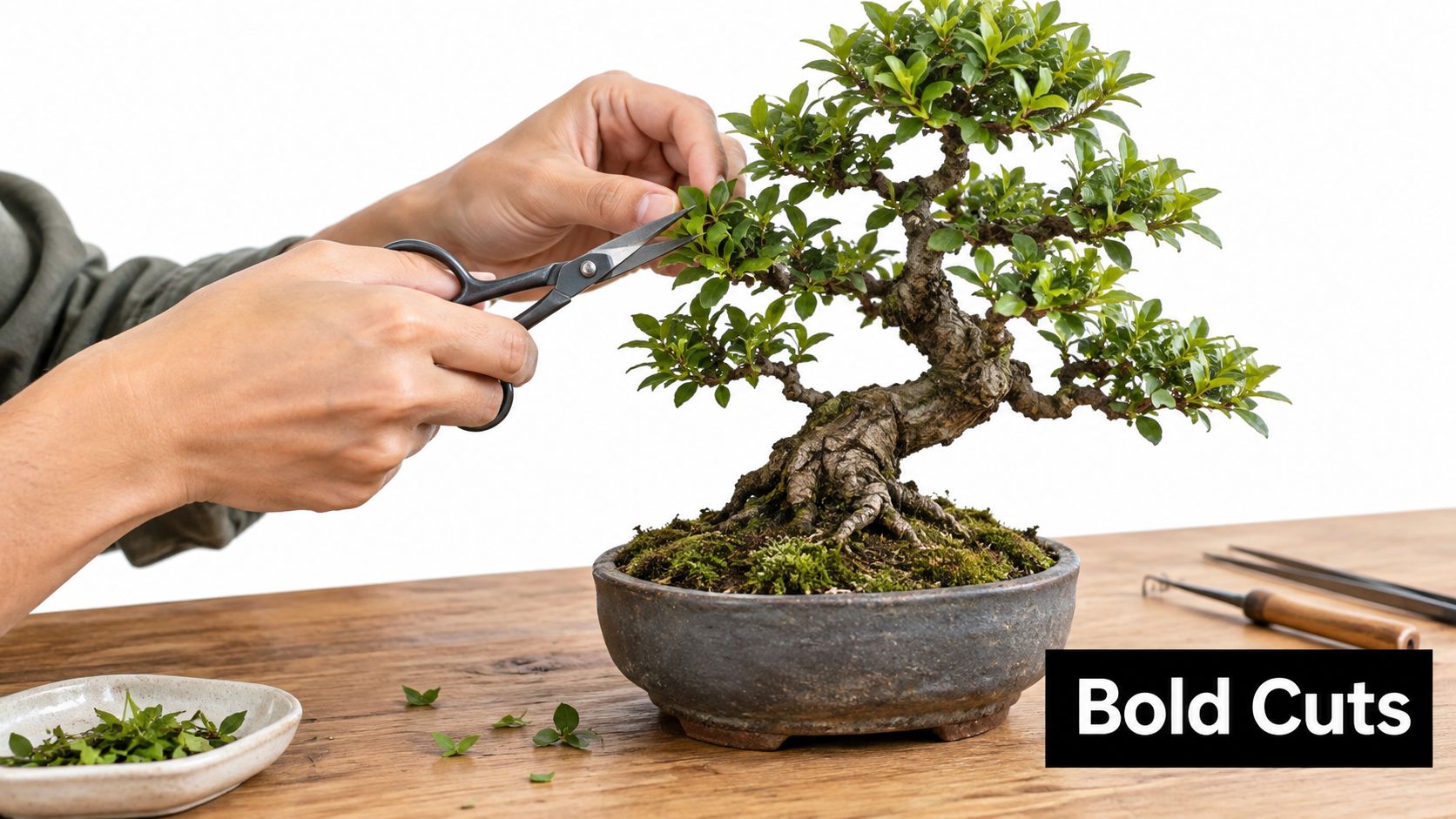
Structural pruning changes the tree's framework. Make those cuts deliberately, after deciding which branches you're keeping and whether the tree is growing strongly enough to recover. Maintenance pruning removes or shortens excess growth to preserve the outline. On tropical species, pinch or trim new shoots only when the tree is actively growing and has enough light to replace what you remove.
Don't prune because a branch looks untidy. First ask whether the tree needs that foliage to build energy, especially if it's already struggling in a dim spot. Clean bonsai shears make controlled cuts; avoid stripping a weak tree to create a finished shape before its health is stable.
Wiring is a separate task from pruning. Apply wire so it supports the branch without cutting into the bark, then check regularly as indoor growth continues. If a wire starts to bite, unwind it carefully rather than pulling it across the branch. Remove it before it leaves a lasting scar, and use smaller adjustments instead of forcing a branch into position all at once.
For a practical demonstration of basic bonsai styling, watch this video before making a major cut or wiring change.
Fertilizer supports growth when the tree can use it. It doesn't fix weak light, poor drainage, or roots kept too wet. If new growth is sparse and stretched, improve the growing conditions before increasing the feed.
Slow-release pellets are convenient for growers who want nutrients released gradually from the surface of the soil. Liquid fertilizer gives more control over the strength and timing of each feeding, but it's easy to apply too concentrated a solution if you ignore the product directions. Soil amendments can address specific needs, but they shouldn't become a substitute for a suitable substrate or good drainage.
For an actively growing indoor tree, choose a bonsai fertilizer and follow its label. If you're unsure how a sensitive tropical species will respond, use a cautious dose rather than assuming a stronger feed will produce stronger growth. Reduce feeding when growth slows in dim conditions, and don't feed a tree with damaged roots to prompt new leaves.
Read the tree before adjusting the program. Healthy new growth usually supports continuing a suitable feeding routine; weak growth calls for checking light and roots first. Leaf symptoms alone can be misleading, so consider the whole plant and recent care changes before changing fertilizer.
Leaves & Soul offers 18-6-8 slow-release Bonsai Fertilizer Pellets and liquid plant foods, alongside bonsai soils and accessories, as options for growers choosing a format that fits their routine.
Indoor bonsai can still attract pests, especially when airflow is poor, foliage is stressed, or the soil stays wet. Start with what you can see: check the leaf surface, the undersides, branch joints, trunk, and the top of the soil. Then inspect the root-zone conditions before deciding the tree needs a treatment.
Fungus gnats often appear around persistently damp soil. Their presence is a reason to check how quickly the substrate dries, whether the pot drains, and whether the tree is receiving enough light. Don't respond by letting a bonsai go bone dry; correct the conditions that keep the mix wet for too long.
Spider mites can become a problem in dry indoor air. Look for fine stippling or a dull, dusty appearance on leaves, then inspect the undersides closely. A fine web may be easier to spot around leaf joints and tender shoots. Isolate the tree, rinse foliage where suitable for the species, and use a horticultural oil only according to its label. Keep treatments off plants in harsh direct light while foliage is wet.
Scale insects may resemble small bumps along stems or leaf midribs. Mealybugs often gather in branch crotches and can look like pale, cottony clusters. Remove small infestations by hand or with a suitable targeted treatment, then recheck the same hiding places. Quarantine new arrivals before placing them beside established trees, and clean tools between plants.
For help recognizing the signs of spider mites, see this guide to juniper spider mites. The species-specific details may differ, but close inspection and prompt isolation are useful habits for indoor growers.
A tree with root problems may wilt even while its soil is wet. Before reaching for the watering can, check whether the pot feels unusually heavy, the soil remains saturated, water drains slowly, or the foliage declines despite moist substrate. These clues point toward a root-zone or drainage issue, not necessarily a lack of water. If decline continues after correcting placement and watering, inspect the roots rather than repeatedly soaking the pot.
A safe first response to suspected overwatering is to stop watering on schedule, clear blocked drainage, remove collected water from the saucer, and let the mix begin to dry. Don't unpot a tree at the first dropped leaf. But persistent wet soil and continued decline warrant a closer root inspection, especially if the substrate has broken down into a dense mass.
Indoor conditions shift with daylight, heating, and humidity. As days become brighter and the tree resumes growth, check the soil more often and watch for new shoots that need light and room. During hot spells, avoid placing a tree where heat builds up behind glass. As daylight falls and growth slows, give the soil more time to dry before watering again. Avoid cold drafts and sudden changes in placement.
Keep a short care log near the tree. Record what you observe, not just what you do. A simple checklist keeps the routine grounded in the plant's condition:
Indoor bonsai health develops through repeated observation, not a single setup or rescue attempt. Learn the species, make one considered adjustment at a time, and give the tree room to respond. If you're starting out, a complete bonsai set with soil, fertilizer, and a pot can also simplify your first project.
Leaves & Soul offers bonsai soils, fertilizers, pots, wiring kits, and complete sets for indoor growers who want purpose-built supplies in one place. Choose the tools that fit your tree's species and care routine, then visit Leaves & Soul to explore the available options.
You've brought home a small tree, found a place for it indoors, and now the soil looks damp but the leaves are dropping. The natural impulse is often to water again. In practice, the bigger question may be whether the species belongs inside at all, and whether the light reaching its leaves is strong enough to support growth.
Indoor bonsai care works best as a process of matching the tree to its environment, then responding to what the tree and soil show you. A reliable routine isn't complicated, but it does depend on observation: look at the species, check the canopy's light, feel the substrate, and diagnose symptoms before reaching for water or fertilizer.
Why Indoor Bonsai Starts With the Right Species
A juniper on a table away from the window may start dropping foliage, even if its owner waters whenever the soil surface looks pale. The problem may be the tree's location and species, not a missed watering. Junipers are temperate outdoor trees; keeping one indoors year-round does not turn it into a houseplant.
Indoor bonsai became more common as growers explored species that could cope with homes and apartments. The Brooklyn Botanic Garden describes the shift from traditional outdoor bonsai to indoor cultivation. In the 1950s, horticulturists including Yuji Yoshimura and his teacher Toshio Okamura worked with nontraditional species suited to indoor conditions and taught the subject widely. Their work points to the practical starting point: indoor bonsai is a species-selection problem first. The Brooklyn Botanic Garden's account of bonsai moving indoors traces the move toward tropical and subtropical trees.
Choose for the home you have
Ficus can suit a warm, bright room, provided it gets enough light and warmth, grows in free-draining soil, and is watered with care. A juniper needs outdoor seasonal conditions. Many pines, maples, and larches also need winter dormancy, making them poor choices for year-round indoor culture. Species needs determine whether a tree can live indoors; placement and care cannot make every bonsai suitable.
Before buying, identify the species and check whether it can remain indoors throughout the year. A small size, decorative pot, or shop label reading “bonsai” tells you little about its growing requirements. Leaves and growth habit can offer clues, but confirm the species where possible. This guide to indoor bonsai trees for beginners offers a shortlist of candidates.
Bench rule: A tree that requires winter dormancy needs outdoor conditions; a bright room cannot provide them.
Reading the Light Your Bonsai Actually Receives
A window's direction helps you choose a starting position, but it can't tell you exactly how much light reaches the leaves. Nearby buildings, curtains, glazing, season, and the tree's distance from the glass all change the light at the canopy. That's why “bright window” is useful shorthand, not a complete diagnosis.
For many homes, a south-facing window is the strongest ordinary indoor location. East- and west-facing windows are secondary options, while a position deep in a room can receive much less useful light than the window itself. The right placement also depends on the species. A tree showing weak growth in an east-facing spot may need a brighter location, while a plant close to hot glass may need protection from harsh conditions.
Read the growth, not just the window
Watch new shoots and leaves over time. Long spaces between leaves, weak or stretched shoots, pale new growth, and leaf drop can point to inadequate light. These signs aren't a diagnosis on their own, so check for other stressors before acting. But if the tree sits far from the glass and keeps producing weak growth, adding fertilizer or water isn't the first fix. Move it nearer a bright window, or consider supplemental lighting.
Light has two aspects: intensity and duration. A dim room lit for a long period isn't necessarily equivalent to a shorter period of strong light. When daylight doesn't provide enough, an artificial light can help; guidance for indoor bonsai recommends approximately 14–16 hours per day of artificial light when natural light is inadequate. Virginia Cooperative Extension's bonsai guidance also cautions that indoor holding periods are normally brief for many bonsai and emphasizes ventilation.
Use a full-spectrum LED positioned to illuminate the canopy, and assess new growth rather than assuming a longer timer setting has solved the problem. There isn't one universal light threshold for every species and home. Window direction is only a proxy, so the tree's response is part of the test.
A Watering Routine Built on Inspection, Not the Calendar
A bonsai near a warm window can dry quickly; one in dim conditions may stay wet much longer. Species matters, too: some tolerate a brief dry-down better than others, while others show stress quickly. Set your routine around the tree's needs and the actual moisture in its substrate, not a fixed weekday.
Inspect, saturate, and drain
Check below the surface rather than judging by the top layer alone. Gently insert a wooden chopstick into the soil. If it comes out damp, wait and check again; if the mix is starting to dry, water thoroughly. Avoid disturbing the roots, and don't treat a moisture-meter reading as universal. Different substrates retain water differently.
Pour slowly over the soil until water flows freely from the drainage holes. Check that the holes are open, then empty the saucer so the pot does not stand in collected water. If a dry mix repels water or has dry pockets, immerse the pot for approximately 5–10 minutes, lift it out, and let it drain fully. Penn State's bonsai care guidance describes this method and advises watering according to need.
Frequent light sprinkling can leave the root ball unevenly watered. The surface may look damp while deeper areas remain dry. Give the soil a thorough soak, then allow excess water to drain.
Practical rule: Check more often when conditions change, but water only when the soil condition calls for it.
Water demand shifts with the season and the tree's surroundings. Warm, dry conditions can require much more frequent watering, while low light and slower winter growth often mean the mix takes longer to dry. During hot, dry periods, some bonsai may need watering as often as twice daily. As noted earlier, species and growing conditions determine the routine, so use the soil's drying pattern to guide each check.
Soil Composition and the Art of Repotting Indoors
A pot can look tidy and still hold a damaging amount of water. For indoor bonsai, soil structure matters because roots need both moisture and air. Dense, compacted mix dries slowly; an overly coarse mix may dry so quickly that the tree can't keep up. Aim for a stable, free-draining substrate suited to the species and the conditions in your home.
| Component | Drainage | Water Retention | Best For |
|---|---|---|---|
| Akadama | Good when the granules retain their structure | Moderate | A structured bonsai mix that balances moisture and air |
| Pumice | Strong | Low to moderate | Improving aeration and keeping the mix open |
| Lava | Strong | Low | Adding durable structure and drainage |
| Pine bark | Moderate | Moderate | Adding organic material and holding some moisture |
These materials can be blended to suit the tree and watering conditions; no single recipe fits every bonsai. Whatever mix you use, check that the pot has open drainage holes and never leave the base standing in collected water. For more help choosing a mix, consult this guide to soil for indoor bonsai.
Repot with the roots in mind
Repotting needs vary with the species, its growth, and how quickly the substrate breaks down. Instead of following a rigid interval, check whether water still passes through well and whether roots have crowded the pot. When you do repot, work gently: lift the tree, loosen circling roots, and remove dead or damaged sections without stripping away every fine root. Preserve healthy feeder roots, which absorb water and nutrients, and keep the tree stable as you settle fresh mix around them.
A decorative pot is a poor trade if it hides drainage problems. Choose a container with working drainage, and check that water exits freely after repotting. If the tree is weakened, avoid combining major root work with aggressive pruning. The aim is to restore a healthy root environment, not to force a dramatic redesign in one sitting.
Pruning and Wiring for Indoor Growth Patterns
Indoor trees often lean toward their strongest light. If the canopy keeps reaching for a window, rotate the pot periodically so growth doesn't concentrate on one side, and observe which shoots remain vigorous. A weak branch may not recover after a hard cut if it already receives little light.
Separate shaping from maintenance
Structural pruning changes the tree's framework. Make those cuts deliberately, after deciding which branches you're keeping and whether the tree is growing strongly enough to recover. Maintenance pruning removes or shortens excess growth to preserve the outline. On tropical species, pinch or trim new shoots only when the tree is actively growing and has enough light to replace what you remove.
Don't prune because a branch looks untidy. First ask whether the tree needs that foliage to build energy, especially if it's already struggling in a dim spot. Clean bonsai shears make controlled cuts; avoid stripping a weak tree to create a finished shape before its health is stable.
Wiring is a separate task from pruning. Apply wire so it supports the branch without cutting into the bark, then check regularly as indoor growth continues. If a wire starts to bite, unwind it carefully rather than pulling it across the branch. Remove it before it leaves a lasting scar, and use smaller adjustments instead of forcing a branch into position all at once.
For a practical demonstration of basic bonsai styling, watch this video before making a major cut or wiring change.
Fertilizing Without Burning Roots or Feeding Weak Trees
Fertilizer supports growth when the tree can use it. It doesn't fix weak light, poor drainage, or roots kept too wet. If new growth is sparse and stretched, improve the growing conditions before increasing the feed.
Match the format to the routine
Slow-release pellets are convenient for growers who want nutrients released gradually from the surface of the soil. Liquid fertilizer gives more control over the strength and timing of each feeding, but it's easy to apply too concentrated a solution if you ignore the product directions. Soil amendments can address specific needs, but they shouldn't become a substitute for a suitable substrate or good drainage.
For an actively growing indoor tree, choose a bonsai fertilizer and follow its label. If you're unsure how a sensitive tropical species will respond, use a cautious dose rather than assuming a stronger feed will produce stronger growth. Reduce feeding when growth slows in dim conditions, and don't feed a tree with damaged roots to prompt new leaves.
Read the tree before adjusting the program. Healthy new growth usually supports continuing a suitable feeding routine; weak growth calls for checking light and roots first. Leaf symptoms alone can be misleading, so consider the whole plant and recent care changes before changing fertilizer.
Leaves & Soul offers 18-6-8 slow-release Bonsai Fertilizer Pellets and liquid plant foods, alongside bonsai soils and accessories, as options for growers choosing a format that fits their routine.
Diagnosing Pests and Diseases in an Indoor Environment
Indoor bonsai can still attract pests, especially when airflow is poor, foliage is stressed, or the soil stays wet. Start with what you can see: check the leaf surface, the undersides, branch joints, trunk, and the top of the soil. Then inspect the root-zone conditions before deciding the tree needs a treatment.
Match the symptom to the likely cause
Fungus gnats often appear around persistently damp soil. Their presence is a reason to check how quickly the substrate dries, whether the pot drains, and whether the tree is receiving enough light. Don't respond by letting a bonsai go bone dry; correct the conditions that keep the mix wet for too long.
Spider mites can become a problem in dry indoor air. Look for fine stippling or a dull, dusty appearance on leaves, then inspect the undersides closely. A fine web may be easier to spot around leaf joints and tender shoots. Isolate the tree, rinse foliage where suitable for the species, and use a horticultural oil only according to its label. Keep treatments off plants in harsh direct light while foliage is wet.
Scale insects may resemble small bumps along stems or leaf midribs. Mealybugs often gather in branch crotches and can look like pale, cottony clusters. Remove small infestations by hand or with a suitable targeted treatment, then recheck the same hiding places. Quarantine new arrivals before placing them beside established trees, and clean tools between plants.
For help recognizing the signs of spider mites, see this guide to juniper spider mites. The species-specific details may differ, but close inspection and prompt isolation are useful habits for indoor growers.
Don't mistake root trouble for drought
A tree with root problems may wilt even while its soil is wet. Before reaching for the watering can, check whether the pot feels unusually heavy, the soil remains saturated, water drains slowly, or the foliage declines despite moist substrate. These clues point toward a root-zone or drainage issue, not necessarily a lack of water. If decline continues after correcting placement and watering, inspect the roots rather than repeatedly soaking the pot.
A safe first response to suspected overwatering is to stop watering on schedule, clear blocked drainage, remove collected water from the saucer, and let the mix begin to dry. Don't unpot a tree at the first dropped leaf. But persistent wet soil and continued decline warrant a closer root inspection, especially if the substrate has broken down into a dense mass.
Adjust care as the room changes
Indoor conditions shift with daylight, heating, and humidity. As days become brighter and the tree resumes growth, check the soil more often and watch for new shoots that need light and room. During hot spells, avoid placing a tree where heat builds up behind glass. As daylight falls and growth slows, give the soil more time to dry before watering again. Avoid cold drafts and sudden changes in placement.
Keep a short care log near the tree. Record what you observe, not just what you do. A simple checklist keeps the routine grounded in the plant's condition:
- Inspect foliage and stems: Look for webbing, scale, mealybugs, leaf discoloration, and weak new growth.
- Check the substrate: Feel below the surface and water only when it begins to dry.
- Confirm drainage: Make sure water exits the pot and doesn't remain in the saucer.
- Assess light and airflow: Note whether growth is reaching toward the window or conditions have become stagnant.
- Prune selectively: Remove dead or unwanted growth, but leave a stressed tree enough foliage to recover.
- Pause when needed: If the tree looks healthy and conditions are stable, don't disturb it with extra water, fertilizer, or unnecessary repotting.
Indoor bonsai health develops through repeated observation, not a single setup or rescue attempt. Learn the species, make one considered adjustment at a time, and give the tree room to respond. If you're starting out, a complete bonsai set with soil, fertilizer, and a pot can also simplify your first project.
Leaves & Soul offers bonsai soils, fertilizers, pots, wiring kits, and complete sets for indoor growers who want purpose-built supplies in one place. Choose the tools that fit your tree's species and care routine, then visit Leaves & Soul to explore the available options.