1

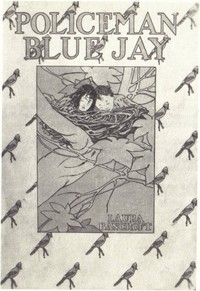
Policeman Bluejay — Reading Notes
11
3
Project Gutenberg
2009
Fantasy literature; Birds -- Juvenile fiction; Nature -- Juvenile fiction
Readers of public-domain and historical texts
Project Gutenberg digital edition
en
Edition facts
Words: 32,821
Reading time: 143 min
Text sections: 5
Source:
Project Gutenberg record #27951
In this bird fantasy, Twinkle and Chubbins become child-larks under Policeman Bluejay's watch. The excerpts show tensions between natural bird habits and human-like care, as the children struggle to feed orphaned goldfinches and confront the limits of their new forms.
Editorial Edition Score
4.7/5
★★★★★
★★★★★
Calculated from edition completeness, EPUB availability, text structure and catalogue metadata. Not a user rating.
Edition quality
From its opening pages, Policeman Bluejay establishes a peculiar tension between natural history and fairy tale. L. Frank Baum, writing as Laura Bancroft, admits in the preface that the story is “fantastical, and intended to amuse rather than instruct,” yet he also claims that “many of the traits of the feathered folk, herein described, are in strict accordance with natural history teachings.” This double stance sets up a recurring pattern: the child protagonists, transformed into larks, must navigate a world where bird instincts and human sensibilities constantly collide.
Feeding the Orphans: Human Care vs. Bird Instinct
When Twinkle and Chubbins take charge of baby goldfinches, their efforts reveal a persistent mismatch between human logic and avian reality. The children stuff the nestlings until “a big bunch in front of each little breast” proves a full crop, yet the babies keep their bills open and cry for more. Twinkle’s exasperated comment—“Wouldn’t you think they’d get tired stretching their bills that way?”—shows her applying human expectations to bird behavior. Chubbins compares the nestlings to his dog, who howled when shut up, and suggests leaving them alone to “shut their mouths.” The episode ends with the children relieved to hand the orphans to Mrs. Chaffinch, a widow who “declared she would be delighted to become a mother.” The text frames this transfer as sensible, but the children’s earlier anxiety lingers: they cannot reconcile the birds’ endless hunger with their own sense of enough.
Policeman Bluejay’s Authority and the Limits of Child-Lark Judgment
Policeman Bluejay functions as a figure of order, but his authority often overrides the children’s instincts. When Twinkle hesitates to give up the goldfinches, the bluejay “hinted that he considered the widow’s experience would enable her to do more for the baby goldfinches than could a child-lark who had never yet laid an egg.” This blunt appeal to biological expertise silences Twinkle. The children’s own judgment is repeatedly questioned: they are larks, but inexperienced ones. Later, Chubbins’s fear that the maple tree might be haunted by “the ghosts of the gray owl, Wisk, and Mrs. ’Possum” is dismissed by the narrative as groundless—“either the poor things had no ghosts or they were too polite to bother.” The story thus maintains a delicate balance: the children are learning, but their human fears and sympathies are not always validated by the bird world’s practical rules.
The Forest as a Stage for Contrasting Voices
The excerpts repeatedly juxtapose the children’s colloquial speech with the formal, slightly archaic language of the bird community. Twinkle and Chubbins speak in a relaxed, conversational tone—“Seems to me, Chub, that we’re lost”—while the bluejay uses measured, almost legal phrasing: “I consider the widow’s experience would enable her to do more.” The narrator’s own voice, especially in the preface, adopts a playful yet didactic register, addressing “my little friends” and defending fairy tales against modern skepticism. This layering of voices creates a textured world where the children’s perspective is central but not dominant. The forest itself is filled with “merry” calls and “brisk, businesslike” chipmunk chirps, suggesting a community with its own rhythms. The children must learn to listen—not just to the bluejay’s commands, but to the subtle cues of their new environment.
Readers will find that the story’s interest lies less in plot twists than in the small, awkward moments when human and bird perspectives fail to align. Pay attention to how the children’s language shifts as they spend more time in feathers, and note which bird characters are allowed to be wrong or foolish. The preface’s warning—that in a fairy tale “it does not matter whether one is awake or not”—invites a relaxed approach, but the text itself rewards close attention to its carefully observed details of bird life and human limitation.
Reader reflection
Record your reading impressions
A brief reflection can help important ideas stay with you longer.
Your progress
0
/
10
2
Was reading this book enjoyable?
3
Is this a title you would suggest to others?
4
How easy was the book to follow?
5
How understandable was the text?
6
Would this book work well in a reading group?
7
Which aspect of the book did you value most?
8
Was the book what you thought it would be?
9
What changed or sharpened your thinking?
10