1

The History of Don Quixote, Volume 1, Part 01 — Edition Insights
10
1
Project Gutenberg
2004
Spain -- Social life and customs -- 16th century -- Fiction; Knights and knighthood -- Spain -- Fiction; Picaresque literature; Romances
Readers of public-domain and historical texts
Project Gutenberg digital edition
en
Edition facts
Words: 30,798
Reading time: 134 min
Text sections: 4
Source:
Project Gutenberg record #5903
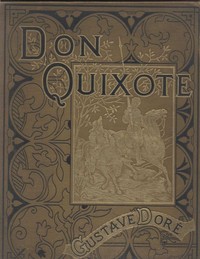
This editorial note examines how John Ormsby's 1885 translation and Gustave Doré's illustrations frame the opening chapters of Cervantes' novel, focusing on the translator's critique of earlier versions and the illustrator's approach to the Manchegan setting.
Editorial Edition Score
4.6/5
★★★★★
★★★★★
Calculated from edition completeness, EPUB availability, text structure and catalogue metadata. Not a user rating.
Edition quality
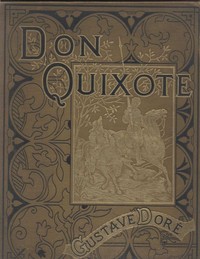
John Ormsby's 1885 translation of Don Quixote, presented here with Gustave Doré's engravings, opens with a preface that is as much a commentary on translation as on the novel itself. Ormsby explains his initial preference for Thomas Shelton's 1612 version, praising its 'racy old style' and its contemporaneity with Cervantes, but concedes that Shelton's 'barbarously literal' and uneven rendering would not appeal to modern readers. This editorial choice—to replace Shelton with a more accurate but less archaic translation—shapes how the first three chapters read: they are precise, but lose some of the 'English of Shakespeare' that Ormsby admired.
Ormsby's Translation and Its Predecessors
Ormsby's preface reveals a translator deeply aware of his predecessors. He dismisses the Jarvis and Motteaux translations as inadequate, yet the edition he worked from (J. W. Clark's 1880 edition) actually used Jarvis's text with corrections from Motteaux. This irony is compounded by Ormsby's critique of Doré's illustrations as 'fanciful' and out of keeping with the novel's realism. The translator insists that the humour of Don Quixote depends on the incongruity between the knight's fantasies and the mundane reality of La Mancha—a reality he claims Doré fails to capture. For instance, Ormsby argues that Doré's drawing of Don Quixote watching his armour in the inn-yard misses the point because the artist did not understand the 'remoteness of all its realities from his ideal.' This tension between translator and illustrator is a recurring subtext in the edition.
La Mancha as a Key to Meaning
Ormsby devotes considerable space to the significance of La Mancha, arguing that the region's 'dullest tract' of 'bald and dreary' plains is essential to understanding Cervantes' satire. He notes that the very title 'Don Quixote of La Mancha' would have immediately signalled to contemporary Spanish readers the incongruity of a knight-errant arising from such an 'ignoble' landscape. The windmills, he adds, are 'the ugliest and shabbiest of the windmill kind.' This emphasis on geographical realism contrasts with the catalog subjects of 'Picaresque literature' and 'Romances,' which might lead readers to expect a more fantastical setting. Instead, the excerpts show that Cervantes' comedy is rooted in the collision between chivalric ideals and the prosaic details of seventeenth-century Spain.
Doré's Illustrations and the Question of Fidelity
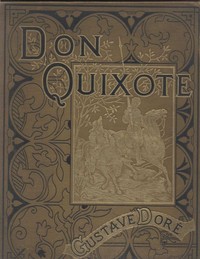
Gustave Doré's engravings, while visually striking, are treated by Ormsby as a potential distraction. The translator criticizes earlier illustrators for knowing 'nothing whatever of Spain' and for failing to convey the 'full force of the discrepancy' between Don Quixote's world and reality. Yet the edition includes Doré's work, and the editor's note acknowledges that 'others feel these woodcuts and steel engravings well match Quixote's dreams.' This debate over illustration reflects a broader question about how visual interpretation can shape a reader's understanding of a text. Readers of this volume encounter both Ormsby's textual precision and Doré's romanticized imagery, creating a layered experience that invites comparison between the translator's literal approach and the illustrator's imaginative one.
This edition of Don Quixote offers a unique opportunity to consider how translation and illustration mediate a classic text. Ormsby's preface provides a critical framework for evaluating the choices made in rendering Cervantes' Spanish into English, while Doré's engravings offer a contrasting visual interpretation. Readers may find it instructive to compare the translator's insistence on geographical and social realism with the illustrator's more fantastical depictions, and to consider how each contributes to—or distorts—the novel's celebrated humour.
Reader reflection
Your personal reading reflection
Build a private reading journal entry for this title.
Your progress
0
/
10
2
What was your overall reaction to the book?
3
Is this a title you would suggest to others?
4
How demanding did the text feel?
5
How useful were the ideas in this book?
6
How strongly did the book affect you emotionally?
7
How did the pace of the book feel?
8
How strong was your personal connection to the text?
9
In one sentence, what did you learn?
10