1

The World Set Free — Background and Themes
10
2
Project Gutenberg
2006
War stories; Imaginary wars and battles -- Fiction; Nuclear warfare -- Fiction
Readers of public-domain and historical texts
Project Gutenberg digital edition
en
Edition facts
Words: 69,025
Reading time: 301 min
Text sections: 9
Source:
Project Gutenberg record #1059
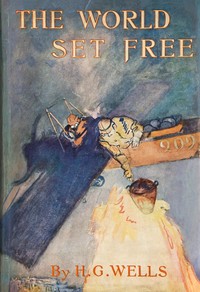
Wells's 1914 novel, written under the shadow of the Great War, forecasts atomic energy and global conflict. The excerpts show a king renouncing his throne amid war's end, a preface admitting prophetic delays, and a pastoral scene that contrasts with the impending catastrophe.
Editorial Edition Score
4.7/5
★★★★★
★★★★★
Calculated from edition completeness, EPUB availability, text structure and catalogue metadata. Not a user rating.
Edition quality
H. G. Wells's The World Set Free (1914) opens with a preface that frankly acknowledges the author's tendency to be 'rather a slow prophet.' Written under the immediate shadow of the Great War, the novel postpones its imagined global conflict until 1956, a delay Wells attributes partly to a desire 'not to shock the sceptical reader's sense of use and wont.' The preface also credits Frederick Soddy's Interpretation of Radium as a key source, grounding the story's central conceit—the release of atomic energy—in contemporary science.
The excerpts that follow reveal a work that shifts between sweeping historical narrative and intimate scenes. A king, presiding over a post-war conference, eats bread and cheese on a mountainside and declares his intention to abolish his own crown. This moment of personal renunciation sits alongside the novel's larger concerns: the end of war, the emergence of a world republic, and the transformative power of new energy sources.
A Prophet's Confession
The preface offers a rare glimpse into Wells's own assessment of his predictive accuracy. He notes that the war aeroplane in reality 'beat the forecast in Anticipations by about twenty years,' and that the opening section of Chapter the Second remains 'a fairly adequate diagnosis of the essentials.' Yet he also admits that 'the misses in the story far outnumber the hits.' This self-awareness shapes how a reader approaches the novel: not as a failed prophecy, but as a deliberate fantasia on contemporary forces. Wells explicitly frames the work as 'the latest of a series of three fantasias of possibility,' each turning on 'the possible developments in the future of some contemporary force or group of forces.' The preface thus functions as a guide to the novel's method, inviting readers to consider which elements are extrapolation and which are wishful thinking.
The King's Renunciation
One of the most striking passages in the excerpts is a dialogue between a king and his counsellor Firmin. The king, eating bread and cheese on a lichenous stone, declares: 'For the first time in my life I am going to be a king. I am going to lead, and lead by my own authority.' His plan is to 'abolish, dispose of, finish, the crown to which I have been a slave.' The scene is remarkable for its blend of the mundane and the revolutionary: the aluminium cup, the bread and cheese, the 'roaring stuff' that has ended the 'rigid old world.' Wells uses the king's voice to articulate a vision of voluntary abdication as a 'sacrament of kings.' The king insists that 'the whole world has got to be a Republic, one and indivisible,' and that his duty is to 'make that easy.' This passage, drawn from later in the novel, suggests that The World Set Free is as concerned with political transformation as with technological change.
Pastoral Contrasts
Before the king's declaration, the excerpts present a pastoral interlude. The king marvels at 'a wilderness of golden broom' and reflects on the 'beautiful old life' of shepherds and peasants that has lasted 'in the Roman times and long ages before.' Firmin, however, sees only a 'social order that is fast vanishing away.' The king's reverie—'lovers, innumerable lovers, have caressed amidst this golden broom'—is undercut by Firmin's practical concerns and the looming conference. This contrast between idyllic past and uncertain future is a recurring structural device in the excerpts. Wells juxtaposes the king's appreciation of natural beauty with the 'roaring stuff' of atomic energy that has ended the old world. The scene also introduces the king's companion, Firmin, whose 'ungenial eye' and protests against the king's decision provide a foil for the monarch's idealism.
The Shape of the Narrative
The table of contents reveals a clear five-part structure: 'The Sun Snarers,' 'The New Source of Energy,' 'The Last War,' 'The Ending of War,' and 'The New Phase,' followed by 'The Last Days of Marcus Karenin.' This progression from discovery to conflict to resolution suggests a teleological arc, but the excerpts complicate any simple reading. The preface's admission of delay and error, the king's personal drama, and the pastoral interlude all indicate that Wells is as interested in the human responses to change as in the change itself. Readers should note that the excerpts are drawn from the beginning and later portions of the text; the middle sections—particularly 'The Last War'—are not represented here. The novel's treatment of atomic warfare, while prescient in concept, is filtered through Wells's Edwardian sensibilities and his faith in rational governance.
As you read The World Set Free, pay attention to the tension between Wells's prefatory self-criticism and the novel's confident narrative voice. The king's renunciation, the pastoral scenes, and the scientific framework all contribute to a work that is part warning, part hope. The excerpts suggest that the novel rewards readers who are interested in how early twentieth-century thinkers imagined the intersection of technology and politics. Consider which elements feel dated and which remain startlingly relevant.
Reader reflection
What did you think of this book?
Answer a few questions and save a private reflection on this device.
Your progress
0
/
10
2
How did the book work for you overall?
3
Would you encourage someone else to read it?
4
What was the reading difficulty like?
5
How original did the book feel?
6
Is this a title worth rereading?
7
Was the book moving at the right speed?
8
Would you like to discuss this book with someone?
9
Which lesson or insight stayed with you?
10