1

The History of Don Quixote, Volume 1, Part 05 — A Reader’s Guide
15
4
Project Gutenberg
2004
Spain -- Social life and customs -- 16th century -- Fiction; Knights and knighthood -- Spain -- Fiction; Picaresque literature; Romances
Readers of public-domain and historical texts
Project Gutenberg digital edition
en
Edition facts
Words: 9,352
Reading time: 41 min
Text sections: 2
Source:
Project Gutenberg record #5907
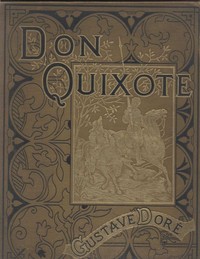
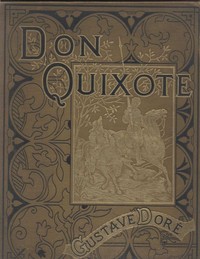
This editorial note examines the structure and imagery in Part 5 of Don Quixote, focusing on the embedded poem 'The Lay of Chrysostom,' the shift from pastoral to violent action, and the recurring motif of physical punishment as a consequence of chivalric ideals.
Editorial Edition Score
4.5/5
★★★★★
★★★★★
Calculated from edition completeness, EPUB availability, text structure and catalogue metadata. Not a user rating.
Edition quality
Part 5 of Don Quixote opens with an extended poetic inset, 'The Lay of Chrysostom,' a despairing lament that occupies the entirety of Chapter XIV. This poem, attributed to the dead shepherd Chrysostom, employs a catalogue of natural and supernatural sounds—lion's roar, wolf's howl, snake's hiss, and the wail of Hell—to convey emotional extremity. The verses stand in stark contrast to the prose narrative that follows, creating a structural hinge between pastoral romance and the rough comedy of physical violence.
The Embedded Poem as Structural Pivot
Chapter XIV consists almost entirely of Chrysostom's verses, a formal elegy that interrupts the narrative flow. The poem's elaborate conceits—demanding that Hell lend its notes, or that monsters from the Nile join the chorus—belong to a tradition of exaggerated pastoral grief. Yet this literary set-piece is immediately followed by Chapter XV's brutal beating of Don Quixote and Sancho by the Yanguesans. The juxtaposition is jarring: high-flown rhetoric gives way to low comedy. Cervantes uses the poem not merely as decoration but as a structural counterweight, testing how far the reader's patience for artifice extends before the story snaps back to physical reality.
Movement from Pastoral to Picaresque Violence
The transition from Chrysostom's lament to the 'unfortunate adventure' with the Yanguesans marks a shift in register. The pastoral setting of the poem—with its references to Tagus and Betis rivers, olive-bordered banks, and lonely shores—gives way to a roadside brawl. Don Quixote's chivalric posturing is met not with a duel but with a shower of sticks. Sancho's pragmatic commentary underscores the absurdity: he notes that Rocinante, whom he thought 'a virtuous person,' caused the beating. The movement from idealized landscape to muddy, painful encounter exemplifies the novel's picaresque tendency to undercut romantic expectations.
Recurring Images of Pain and Bodily Harm
Physical suffering is a constant in this section. Chrysostom's poem dwells on 'shreds from my vitals torn' and 'discord wrung by mad despair,' while the prose narrative delivers literal blows. Don Quixote, unable to rise, complains that his body, 'reared in soft cloth and fine linen,' feels the pain more keenly. Sancho, in contrast, claims his shoulders are used to 'such squalls.' The image of the battered knight and squire lying on the ground recurs throughout the chapter, reinforcing the gap between Quixote's imagined glory and his actual helplessness. Even Rocinante is implicated: Sancho blames the horse for the thrashing, personifying it as a traitor.
Dialogue as a Vehicle for Contrasting Worldviews
The exchange between Don Quixote and Sancho after the beating crystallizes their opposing perspectives. Quixote insists that suffering is 'necessary accompaniments of the calling of arms,' while Sancho asks whether such mishaps 'have their own fixed times.' The master appeals to chivalric precedent—citing Amadis of Gaul—while the squire thinks in terms of harvests and survival. Their dialogue is structured as a series of rebuttals, with each speaker talking past the other. This pattern, established early in the novel, here serves to highlight the irreconcilability of idealism and pragmatism, even as both characters share the same physical predicament.
Readers approaching Part 5 should attend to the way Cervantes alternates between literary artifice and raw physical comedy. The poem in Chapter XIV demands a different kind of attention than the brawl in Chapter XV; the pleasure of the section lies partly in the friction between these modes. Notice how the characters' voices—Quixote's inflated rhetoric, Sancho's proverbial wisdom—remain consistent even as the setting shifts from pastoral to picaresque. This volume offers a concentrated example of the novel's structural ingenuity.
Reader reflection
How will you remember this book?
Save your reaction, strongest insight, and memorable passage.
Your progress
0
/
10
2
How did the book work for you overall?
3
Is this a title you would suggest to others?
4
How much effort did this book require?
5
Is this a title worth rereading?
6
How useful were the ideas in this book?
7
Did you relate to its people, ideas, or situations?
8
Did any part of the book stay with you emotionally?
9
Which lesson or insight stayed with you?
10