1

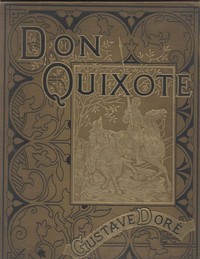
The History of Don Quixote, Volume 1, Part 04 — Text and Context
10
3
Project Gutenberg
2004
Spain -- Social life and customs -- 16th century -- Fiction; Knights and knighthood -- Spain -- Fiction; Picaresque literature; Romances
Readers of public-domain and historical texts
Project Gutenberg digital edition
en
Edition facts
Words: 15,965
Reading time: 70 min
Text sections: 2
Source:
Project Gutenberg record #5906
This editorial note examines Cervantes' narrative play in Part 4 of Don Quixote, focusing on the author's self-aware interruption, the contrasting voices of Quixote and Sancho, and the embedded story of Marcela, which challenges knightly ideals through direct speech.
Editorial Edition Score
4.5/5
★★★★★
★★★★★
Calculated from edition completeness, EPUB availability, text structure and catalogue metadata. Not a user rating.
Edition quality
Cervantes opens Part 4 with a metafictional twist: the narrator claims to have discovered the missing continuation of the battle with the Biscayan in a pile of old papers. This device, announced in Chapter IX, turns the reader into a co-discoverer of the story. The narrator's frustration at the earlier abrupt halt—"the delightful history came to a stop and stood cut short"—mirrors the reader's own impatience, while the claim that every knight-errant must have a sage chronicler slyly justifies the very text we hold.
The Interrupted Battle as Narrative Engine
The battle between Don Quixote and the Biscayan, left hanging at the end of Part 3, resumes with a flourish. Cervantes uses the interruption to comment on the nature of chivalric tales: the narrator laments that the story was "cut short without any intimation from the author where what was missing was to be found." This self-conscious break draws attention to the artificiality of the narrative. The description of the blows—"if they had fallen full and fair they would at least have split and cleft them asunder from top to toe and laid them open like a pomegranate"—is deliberately overblown, parodying the hyperbolic style of romance. The resolution, when it comes, is anticlimactic: the narrator finds the rest in a manuscript, a joke that undercuts the epic tension.
Sancho Panza's Earthy Counterpoint
In Chapter X, Sancho Panza's voice provides a grounding contrast to his master's lofty delusions. When Don Quixote speaks of the "sweet discourse" of lovers, Sancho interjects with practical concerns: "I would rather have a crust of bread and an onion than all the love in the world." His proverbs and literal-mindedness puncture Quixote's rhetoric. The dialogue reveals a pattern: Quixote interprets events through chivalric lenses, while Sancho sees only the physical reality. This tension is not merely comic; it dramatizes the conflict between idealism and pragmatism that runs through the entire work. Sancho's complaints about hunger and fatigue remind the reader that adventures have bodily costs.
The Goatherd's Tale and the Shepherdess Marcela
Chapters XI-XIII introduce a pastoral interlude through the goatherd Pedro's story of Chrysostom and Marcela. The narrative shifts to a rustic setting, and the goatherd's speech is marked by colloquialisms and digressions. When Don Quixote corrects his mispronunciation of "Sarra" for "sarna," Pedro retorts: "if, senor, you must go finding fault with words at every step, we shall not make an end of it this twelvemonth." This exchange highlights the gap between Quixote's pedantic literalism and the goatherd's natural storytelling. Marcela, who appears later to defend her rejection of Chrysostom, speaks in a reasoned, eloquent voice that challenges the male characters' assumptions about love and obligation. Her words—"I was born free"—resist the role of passive beloved.
Diction and the Parody of Romance
Cervantes' diction in this part oscillates between mock-heroic grandeur and plain speech. The narrator's description of the battle uses inflated terms like "furious slashing blows" and "valiant" and "renowned," but the actual fight is brief and messy. The goatherd's tale, by contrast, is told in a homely style, with phrases like "I fancy I can see her now with that countenance which had the sun on one side and the moon on the other." This juxtaposition undercuts the pretensions of chivalric language. Even Quixote's corrections of the goatherd's vocabulary—insisting on "Sarra" over "sarna"—show his obsession with verbal precision, a trait that Cervantes gently mocks. The translation by John Ormsby preserves these tonal shifts, rendering the goatherd's speech with rustic flavor and the narrator's with formal irony.
Readers attentive to Cervantes' authorial choices will notice how he layers voices—the narrator's, Quixote's, Sancho's, the goatherd's, Marcela's—each with distinct registers. The interruptions, corrections, and shifts in tone are not flaws but deliberate strategies that question the authority of storytelling itself. As you read, observe how the text constantly reminds you that it is a constructed artifact, a game with conventions rather than a straightforward adventure.
Reader reflection
How will you remember this book?
Save your reaction, strongest insight, and memorable passage.
Your progress
0
/
10
2
What was your overall reaction to the book?
3
Would you pass this book on to a friend?
4
How demanding did the text feel?
5
How would you describe its reading pace?
6
How understandable was the text?
7
Is this a title worth rereading?
8
Which element worked best for you?
9
What is the main idea you are taking away?
10